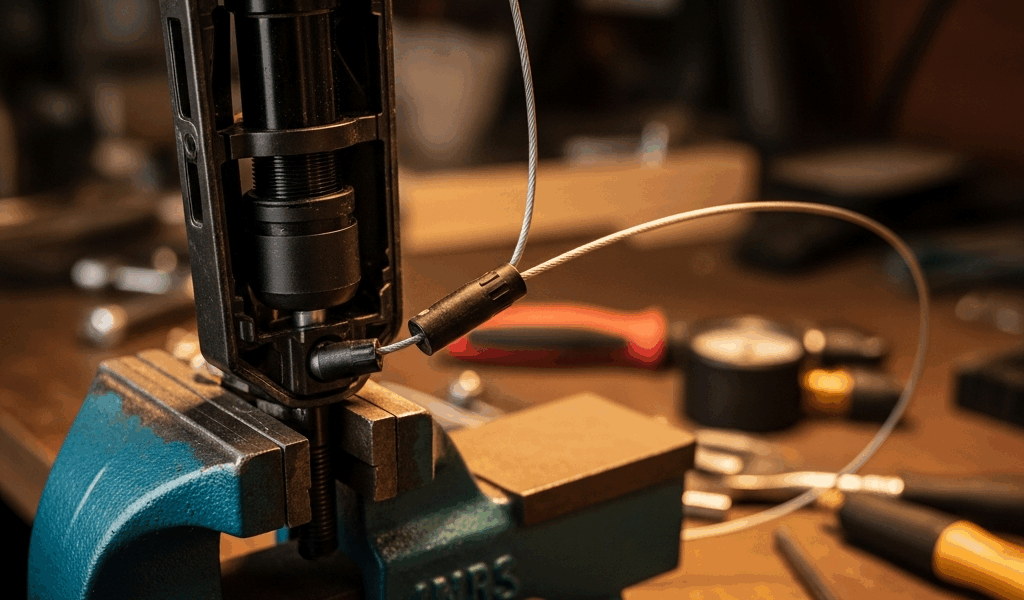
Why Dropper Posts Fail and What You’re Actually Fixing
Dropper posts have gotten complicated with all the conflicting advice flying around. Ask three riders what’s wrong with yours and you’ll get four answers, two of them wrong. I’ve wrenched on enough of these — my own included, after a particularly embarrassing trailhead moment involving a fully extended seat and a very steep descent — to know that most of the panic is unnecessary.
So today I’ll share everything I’ve learned. The whole diagnosis, start to finish.
But what is a dropper post failure, really? In essence, it’s either a mechanical problem or an internal one. But it’s much more than that distinction suggests. Mechanical failures live outside the post — cable tension gone wrong, a lever clamp cranked too tight, housing packed with trail mud. Internal failures happen inside the pressurized cartridge itself — seal degradation, pressure loss, broken components you can’t see or touch without a rebuild kit and some confidence.
Here’s the stat that should calm you down: roughly 90% of dropper problems are mechanical. Fixable in your driveway with a 4mm hex key and a shock pump. The other 10% — true cartridge failure — means a warranty claim or a shop visit. Knowing which situation you’re in is the whole game. That’s what makes smart diagnosis endearing to us riders who’d rather spend money on tires than on unnecessary parts.
So, without further ado, let’s dive in.
Post Will Not Drop When You Press the Lever
You pull the lever. Nothing. The post just sits there like it didn’t get the memo. This is almost always mechanical — and almost always one of three things.
Check Cable Tension First
Grab the cable where it exits the lever body and pull it gently by hand. What you want is light, clear resistance. Not slack. Not guitar-string tight. Slack cable means your barrel adjuster has backed out from vibration — tighten it clockwise in quarter-turn increments until tension returns, then test the lever after each adjustment.
Over-tension is the sneaky one. A cable that’s too tight actually prevents the lever from generating enough pull to trigger the post mechanism. Back off the barrel adjuster counter-clockwise a quarter-turn. Try again. The lever should return to center on its own — if you’re muscling it back, tension is still too high.
The Lever Clamp Bolt — This One Gets Everyone
Probably should have opened with this section, honestly. I’m apparently someone who over-tightens everything, and a 5mm hex key works for me while “snug” never actually means snug in my hands. First dropper I ever installed — a KS LEV 150mm, around $180 at the time — wouldn’t drop at all. Dead stop. I’d cranked the lever clamp bolt so hard it crimped the cable housing inside the clamp. No movement possible. Don’t make my mistake.
Find the bolt securing the lever to your handlebar. Loosen it one full turn counter-clockwise from wherever it currently lives. The lever should pivot freely on the bar when there’s no cable tension, then stay put under riding conditions. Tighten it back slowly — stop the moment it feels snug. Test the drop. You want friction, not a vice.
Housing Damage and Mud
Look at the entire cable path from lever to seat tube entry point. Kinks in the housing are friction death — the lever pull never fully transmits to the post. If you spot one kink, you’ve probably found your problem. Replacement housing runs about $8–12 for a meter of quality stuff. Disconnect at both ends, pull the old section, feed new housing through the frame routing, reconnect, adjust barrel tension. Fifteen minutes.
Mud packed into the cable ports is the other culprit — especially on bikes with external routing at the seat tube junction. An old toothbrush and some water clears it out in two minutes. Worth checking before you touch anything else.
Post Drops But Will Not Return to Full Height
This one is almost always air pressure. The pressurized cartridge inside the post stanchion is what pushes everything back up when you release the lever. When that pressure drops below spec — through normal seal weeping over time — the return stroke gets lazy, then slower, then nonexistent.
Checking Air Pressure
While you won’t need a full suspension workstation, you will need a handful of things: a shock pump with a dual-head fitting (Schrader and Presta), your post’s manual, and five minutes. Most bike shops will loan you a shock pump without question. The RockShox Reverb charging port sits on the post body near the clamp collar. OneUp Components routes theirs into the lever itself — a genuinely clever design. KS posts vary by model year, so pull up the manual for your specific unit.
First, you should locate the recommended pressure range — at least if you want the diagnosis to mean anything. RockShox Reverb specs typically run 150–200 PSI depending on rider weight. Connect the shock pump, read the gauge before you add anything. A post sitting at 110 PSI when it should be at 180 PSI has your answer right there. Pump to spec, disconnect the pump quickly to minimize pressure loss at the valve, and test the return stroke. A healthy post snaps back to full height in under two seconds.
Seatpost Collar Crushing the Post
Air pressure correct but return still sluggish? Check your seat tube collar. Over-tightened collars — common after a post-swap where someone grabbed a torque wrench and went to 8Nm on a post specced for 5Nm — crush the post body and create internal drag throughout the stroke. Loosen the collar bolt half a turn. Test the return. Tighten only enough to stop rotation under pedaling force. That’s it. That’s the whole fix.
Stanchion Dirt Buildup
The exposed stanchion — that polished metal section visible when the post is dropped — collects trail grit, dried mud, and whatever else your rear wheel throws at it. That buildup acts like sandpaper on the seals. Wipe the stanchion clean with a damp rag, then apply a single drop of light suspension oil — Motorex Foam and Seal Spray works well, or any light mineral oil. Two minutes. Works embarrassingly well for how simple it is.
Post Is Slow or Sluggish in Both Directions
A dropper that takes three full seconds to drop isn’t a broken dropper — yet. It’s a dropper telling you something. Listen to it now, before it stops working entirely mid-descent on something consequential.
Corroded or dirty cable housing is the single most common cause of sluggish behavior across both directions. The friction builds gradually — you adjust to it, ride with it for months, then one day notice you’re waiting for your seat. Full cable and housing replacement is the reliable fix here. Not cleaning. Replacing.
Cable Replacement Walk-Through
Disconnect at the lever end first: loosen the barrel adjuster fully, then unscrew the cable nipple from its seat. At the post end, disconnect where the cable enters the post body — usually a barrel adjuster fitting or a crimped end depending on the manufacturer. Pull the old cable free of the housing.
Internally routed frames — and most modern trail bikes are internally routed — require one extra step. Before pulling the old cable, tie a bleed string to the cable end. A 50cm piece of brake bleed hose or nylon cord works perfectly. Pull the cable out slowly; the string follows it through the frame. Tie your new cable to the string end, pull the string back through, and routing is done. Total time: 20–30 minutes including adjustment.
New cable through existing housing, reconnect at both ends, dial barrel tension to feel. This resolves sluggish behavior about 70% of the time. That number makes sense when you consider most riders never touch the cable for the first two years of ownership.
If Cable Is Clean — Check Air Again
Fresh cable installed and still mushy? Measure pressure again. Posts lose air slowly as seals age — 5–10 PSI per month isn’t unusual on a well-used post. A post running 120 PSI instead of 180 PSI will feel thick and hesitant in both directions. Pump it to spec. Retest. If it holds pressure for two weeks, you’re fine. If it drops back down in three days, the seals are going and you’re moving into warranty territory.
When the Post Itself Is the Problem
Frustrated by the occasional genuinely broken post, I’ve learned to recognize the signs that no amount of cable work will solve. A post that collapses under body weight mid-ride — not a gradual sink, but a sudden drop. Oil seeping visibly from the stanchion junction. A hissing sound or air bubbling when you connect a shock pump. These are internal cartridge failures — broken components, degraded seals, pressure loss that comes back the moment you diagnose it.
This new category of problem evolved out of dropper technology’s early years and eventually became what suspension techs know and rebuild today. A cartridge rebuild at a qualified shop runs $60–120 depending on the post brand and labor rates. Worth every dollar on a $300+ post. Contact your manufacturer’s warranty support first — RockShox, Fox, OneUp, and KS all have warranty programs that move faster than most people expect.
But honestly? Most dropper problems are cable tension or air pressure. Start mechanical every time. Nine times out of ten, you’ll fix it yourself and be back on the trail before the afternoon light goes flat.



Stay in the loop
Get the latest trail rise updates delivered to your inbox.