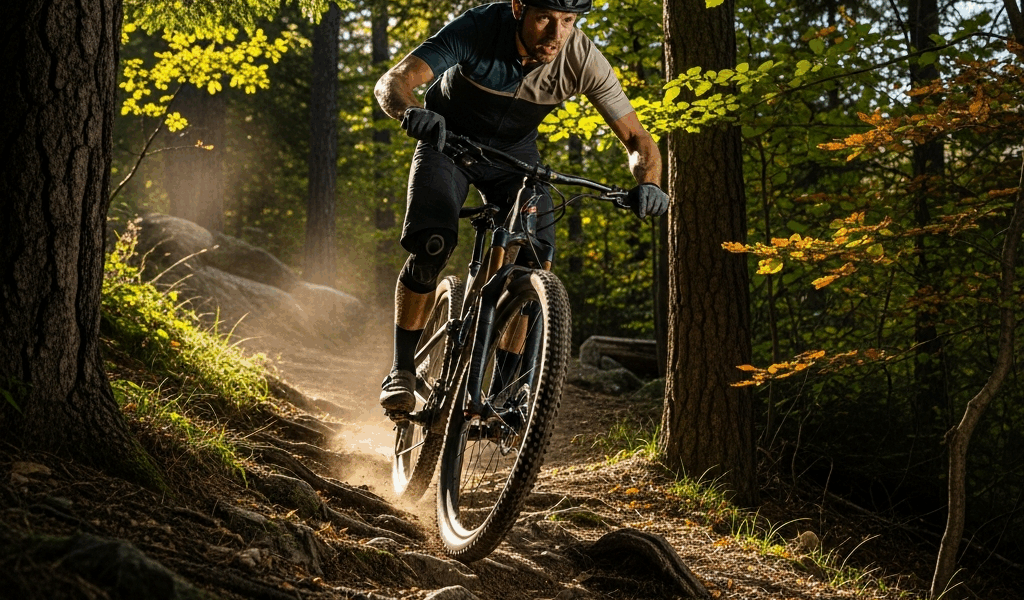
MTB fitness has gotten a bit overcomplicated by people selling training programs, but the actual requirements aren’t that mysterious. As someone who came from road cycling and expected trail fitness to translate directly, I learned fairly quickly that the two activities share an engine but demand very different things from the rest of the machine. Building endurance for longer, better trail rides means training specifically for trail, not just riding more of whatever you’re already doing.
The Aerobic Base — Your Engine
Aerobic base is the foundation of all endurance fitness. The most effective way to build it is long, easy rides at a pace where you can hold a full conversation without pausing. This zone-2 effort burns fat efficiently, builds mitochondrial density in muscle cells, and creates the aerobic infrastructure that harder efforts draw from.
Most amateur riders go too hard on their easy days and not hard enough on their hard days — the classic “moderate intensity” trap that builds steady fatigue without actually developing fitness. Two or three easy rides per week at truly easy effort, with one hard day of intervals or steep climbs, produces better fitness gains than five moderate rides. Probably should have led with this, honestly. The polarized approach feels wrong because easy days feel too easy, but that’s the point.
For trail riding, your easy aerobic days can be on trail — just keep the effort genuinely low. If you’re breathing hard enough that conversation requires pauses, you’re going too hard for a base ride.
Long Ride Progression
The long ride is the centerpiece of MTB endurance training. Start with what you can comfortably complete now and add 10–15% duration every 2–3 weeks, with a step-back week (reduce duration 20–25%) every fourth week to let recovery and adaptation happen.
Trail riding mileage is less meaningful than time. Three hours on technical singletrack may cover fewer miles than three hours on a fire road but generates significantly more fatigue and neuromuscular adaptation. Track your long ride in hours, not miles. The GPS number doesn’t tell you much about what actually happened to your legs.
Sustained Climbing — The Hardest MTB Fitness Test
Long climbs are where MTB fitness gaps show up most clearly. Building climbing endurance requires specifically training sustained climbing — not just riding flat terrain for long periods. Weekly tempo climb efforts (30–45 minutes at a comfortably hard sustained effort, not all-out) develop the muscular endurance that long ascents demand.
If you don’t have access to long sustained climbs, hill repeats approximate the training stimulus: 8–12 minutes hard up a short climb, easy descent recovery, repeat four to six times. Less scenic than a mountain climb but similarly effective for building climbing-specific fitness. I apparently live somewhere with enough short steep climbs to make this work without driving to the mountains every week.
Fueling for Longer Rides
Glycogen stores last approximately 90 minutes of sustained moderate-hard effort. Riding beyond that without fueling produces the bonk — a sudden, dramatic decline in power and mental clarity that turns a great ride into a survival exercise. The solution is starting fuel intake in the first 45 minutes of any ride over 90 minutes, before you feel hungry. By the time you feel hungry, you’re already behind.
60–80g of carbohydrate per hour is a practical target on longer rides. Gels, dates, rice cakes, bananas, or sports drink all work. Experiment during training to find what digests well at effort before relying on it in a race or a long backcountry day where running out of fuel has actual consequences.
Recovery — Where Fitness Is Built
Training stress creates the signal for adaptation; recovery is when the adaptation actually happens. Hard rides without adequate recovery accumulate fatigue that masks fitness gains and eventually leads to overuse injury or burnout. Most amateur riders would improve faster by riding less and recovering more. That’s apparently a controversial statement but the evidence is fairly clear on it.
Practical recovery practices: 7–9 hours of sleep per night (the single biggest lever for athletic recovery), protein within 30 minutes of hard efforts (20–40g to start muscle repair), and at least one full rest day per week regardless of how good you feel. Easy rides on recovery days genuinely help recovery by promoting blood flow without generating meaningful training stress.



Stay in the loop
Get the latest trail rise updates delivered to your inbox.