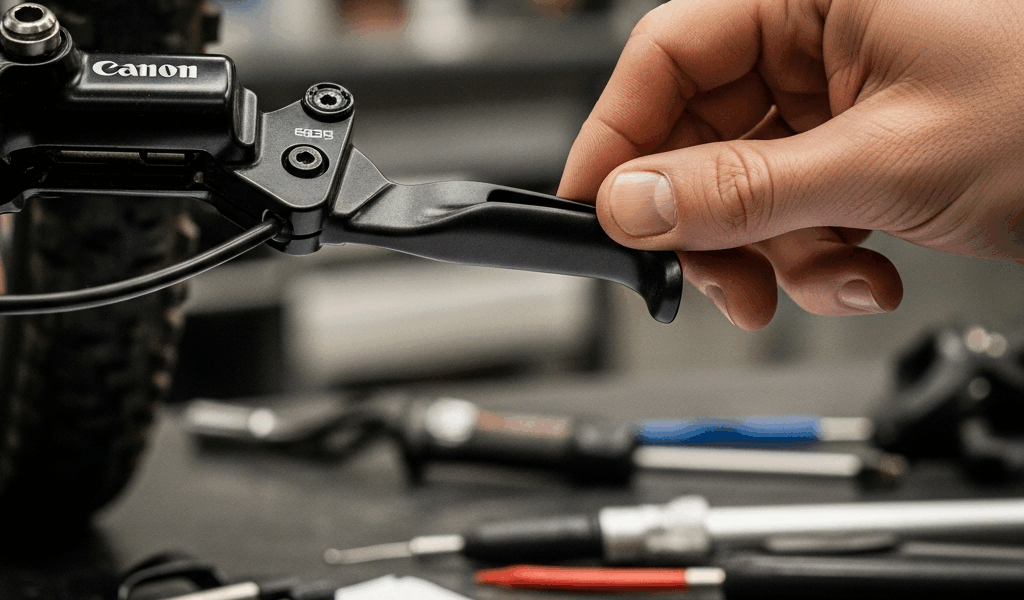
Why Your Brake Lever Feels Spongy
Spongy MTB brakes have gotten complicated with all the conflicting advice flying around. Bleed it. Don’t bleed it. Top it off. Replace the hose. Honestly, most of the time it comes down to three things — and knowing which one you’re dealing with before you start wrenching saves hours of frustration.
The most common culprit is trapped air somewhere in your hydraulic line. Even a bubble the size of a pencil eraser compresses when you squeeze, eating up lever travel before any real braking force transfers. Second is low reservoir fluid — drop below the minimum line and there’s simply not enough liquid in the system to move pressure cleanly to the caliper. Third is a loose banjo bolt or hose fitting letting air creep in gradually. That one tends to show up after a crash or a long, punishing descent in July heat.
Quick Check Before You Do Anything Else
Before you crack open a bleed kit, run through these fast. First, check your lever’s reach adjuster — the small dial or screw near the pivot point. I once convinced myself my brakes were dying when I’d just bumped the reach adjuster tight during a chaotic van pack after a trail day outside Moab. A quarter-turn counterclockwise and the lever snapped right back. Don’t make my mistake.
Next, run your hand along the entire brake hose from lever to caliper. Feel for kinks or pinch points against the frame. A kinked hose doesn’t always produce a soft lever, but it takes fifteen seconds to rule out.
Now pop the reservoir cap. Shimano reservoirs have a small inspection window on the side; SRAM tops are fully transparent. Look inside. Is fluid sitting below the minimum line? Flag that before you do anything else — topping off incorrectly creates a whole separate problem.
Finally, pump the lever ten times fast without engaging the brake. Does the feel improve even slightly? That’s air. Does it stay equally mushy no matter what? You’re either dealing with a fluid level issue or a fitting leak. That distinction matters.
How to Fix a Spongy Lever Step by Step
Step 1 — Tighten the Banjo Bolts and Hose Fittings
Grab a 4mm or 5mm Allen wrench — check your specific brake first, because they vary. The banjo is that small curved metal fitting where the hose meets the lever body. Tighten it firmly. Not gorilla-grip firmly. These fittings are small and the threads strip fast if you overdo it. Do the same at the caliper end. A single turn of added tightness on a weeping fitting can restore lever feel immediately — no bleed required.
Step 2 — Top Off Your Fluid Reservoir
This is where brand matters enormously. Shimano brakes run on mineral oil. SRAM brakes use DOT 4 or DOT 5.1. Those two fluid types are not interchangeable — not even a little. Mixing them destroys the internal seals and turns your brake into an expensive paperweight. I’m apparently someone who had to learn that on a rental bike in 2019 and the shop bill was deeply unpleasant.
Check your reservoir cap or your brake manual before you buy anything. The cap usually has the fluid type stamped right on it. Buy the correct bottle — Shimano Mineral Oil or Finish Line DOT 5.1 are both widely available for around $8 to $12 — and top off to the maximum line. Retest before moving on.
Step 3 — If the Lever Still Feels Soft, You Need to Bleed
Air is deep in the system at this point. Buy or borrow the correct bleed kit for your brand. Shimano kits use a syringe with proprietary fittings; SRAM uses a lever-mounted syringe or a gravity bleed setup depending on whether you’re running Guide, Code, or Level brakes. The specifics differ but the core logic is always the same — seal one end, push fresh fluid in from the other, force the air out.
Most people complete a bleed in about fifteen minutes once they’ve done it once. Follow the instructions that come with the kit exactly. Skipping steps is how you introduce more air than you started with.
When Bleeding Is the Only Fix
Some situations skip straight past the quick checks. Crashing hard. Long summer descents where your fluid heats up and expands. Repeatedly slamming the lever into a frame bag on a rocky trail. All of these push air into places topping off can’t reach.
But what tells you a bleed is your only path forward? In essence, it’s when the lever pulls all the way to the bar with barely any resistance. But it’s more than that. Look into the open reservoir — if you see small bubbles clinging to the sides or floating in the fluid, that air isn’t going anywhere without a syringe and a bleed port. That’s your answer.
The good news is a proper bleed restores brake feel completely. Dead spongy to crisp and confident in one session. That’s what makes a well-bled hydraulic brake endearing to us mountain bikers — when it’s right, it’s really right.
How to Stop It Happening Again
Probably should have opened with this section, honestly. Three habits keep spongy brakes from becoming a recurring thing.
Bleed once a year during winter maintenance — before the season kicks in, not after the first ride where your brakes feel wrong. After any crash or hard impact, spend ten minutes checking your banjo bolts and hose fittings even if the brake feels fine. Air leaks start small. And store your bike upright or with levers roughly level when it’s sitting in the garage for more than a few days. Parking a bike on its nose for a week lets fluid shift into weird spots in the hose, and those spots can trap air.
One thing you can do right now: pull up your brake manual online, screenshot the page that specifies fluid type and torque specs for your banjo bolt, and save it to your camera roll. Next time you’re at a shop or standing in front of a parts wall, you’ll know exactly what you need instead of guessing and hoping.

Stay in the loop
Get the latest trail rise updates delivered to your inbox.