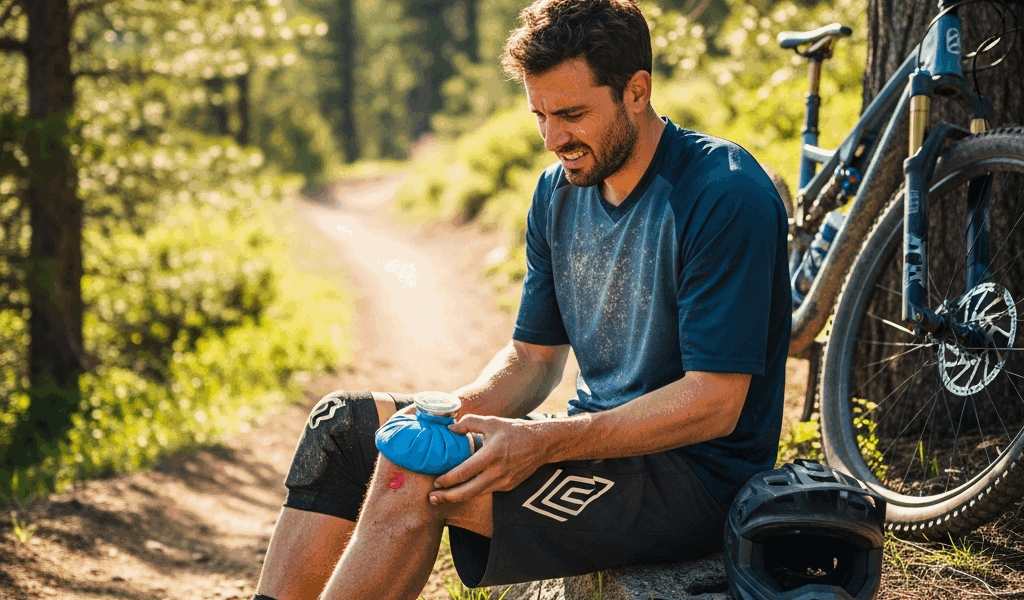
MTB injuries have gotten more attention as the sport has gone mainstream, but a lot of the advice out there is either too generic (stretch more) or too alarmist (you’ll destroy your knees). As someone who’s dealt with most of the common MTB injury patterns firsthand and spent time figuring out what actually resolves them rather than just managing them indefinitely, I’ve learned that most of these are genuinely preventable once you understand what’s causing them.
Knee Pain — The Most Common MTB Complaint
Knee pain is so prevalent in mountain biking that many riders treat it as normal. It’s not — it’s a signal that something in your setup or movement pattern is off. The two most common presentations:
Pain behind the kneecap (patellofemoral syndrome): Usually caused by a saddle that’s too low, forcing the knee to compress the patella against the femur throughout the pedal stroke. Raise saddle height 5mm and see if symptoms improve within two weeks. Weak hip abductors — the muscles stabilizing your pelvis — are also a major contributor. Single-leg squats and lateral band walks target this specifically. I’m apparently someone with significant hip abductor weakness, which explained a lot of my knee history once I actually tested it.
Pain on the outer knee (IT band syndrome): The iliotibial band runs from the hip to the outer knee and gets irritated when tight. Saddle too high (causing excessive hip rocking) is a common trigger. Regular foam rolling of the outer quad and hip, combined with hip flexor stretching, addresses the tightness. Reduce mileage temporarily while the tendon calms down — trying to ride through acute IT band syndrome rarely works.
Lower Back Pain
Lower back pain on the bike typically comes from one of three sources: saddle too high (hip rocking), bars too low (excessive forward lean), or weak core muscles that can’t maintain a stable riding position for 2+ hours. The fix is usually a combination of bike fit adjustment and off-bike strengthening.
Planks, dead bugs, and bird dogs build the deep stabilizer muscles that hold your lumbar spine neutral under load. Tight hip flexors from sedentary work also pull the pelvis into anterior tilt, stressing the lower back — hip flexor stretching (couch stretch, lunge stretch) should be daily practice for anyone who sits at a desk and then gets on a bike. That’s probably most of us, honestly.
Wrist and Hand Numbness
Ulnar nerve compression (ring finger and pinky numbness) and median nerve compression (index/middle finger numbness) are both common on trail bikes. Causes include gripping the bars too hard (usually from anxiety on technical terrain), bars too low, and poor grip positioning.
Padded gloves help, but the real fix is reducing grip tension. Many riders grab hard when scared or uncertain, which cuts off circulation. Conscious practice of a light grip through smoother terrain builds the habit. On long ride days, shake out your hands at trail junctions periodically — that’s enough to restore circulation and prevent the numbness from accumulating into something that lasts days.
Shoulder and Neck Tension
Neck pain usually traces to bars too low, a reaching position that’s too extended, or riding with tense, elevated shoulders. Conscious shoulder-drop drills on the trail help — check in with your shoulder position every few minutes and actively relax them down from your ears. It sounds too simple to matter. It matters.
Shoulder impacts in crashes can cause AC joint injuries that linger for months. Strengthening the rotator cuff muscles through external rotation exercises with a resistance band builds resilience for crash absorption in ways that make a real difference over a riding career.
Crash-Related Injuries — Prevention and Response
Clavicle fractures, wrist fractures, and rib contusions are the most common acute MTB injuries. Protective gear reduces severity significantly:
- Full-face helmet: essential for DH and technical enduro; the chin bar protection is the part that matters most
- Knee/shin guards: trail-spec guards (Leatt 3DF, POC Joint VPD) stop most scrapes and manage moderate impacts without being miserable to wear
- Elbow guards: often skipped but highly effective for rock gardens and drops
- Back protector: worthwhile on aggressive terrain; spine board style provides better protection than basic foam
Building Resilience Through Training
The riders who get injured least are the ones who train off the bike for riding. Strength work targeting glutes, hamstrings, hip abductors, and deep core muscles builds the structural resilience that keeps knees, hips, and the lower back healthy through high-mileage seasons. Recovery matters equally. Three hard rides per week without adequate sleep and protein is a reliable path to chronic overuse issues. Listen to early warning signs: persistent joint ache that continues more than two days after a ride warrants rest, not another ride.

Stay in the loop
Get the latest trail rise updates delivered to your inbox.