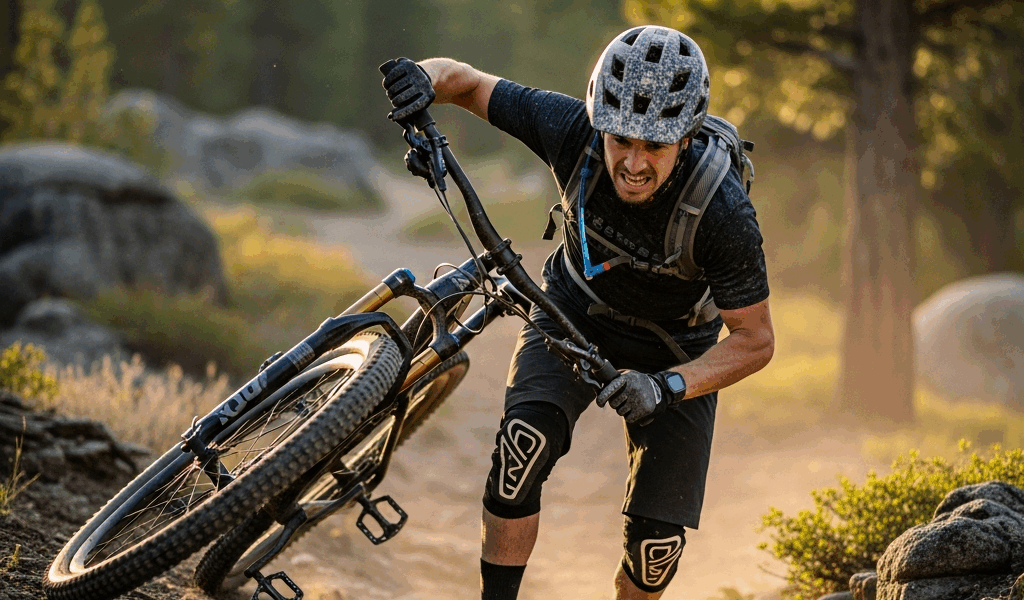
Returning to the bike after a crash has gotten overcomplicated by advice that’s either too physical (“just ride through the fear”) or too soft (“take all the time you need”). As someone who’s crashed meaningfully enough to require medical attention and had to navigate the actual return process, I’ve learned that the physical and mental timelines are often completely out of sync — and treating them independently is what actually works.
The Physical Timeline
Minor crashes — road rash, bruising, small lacerations — typically need a few days of rest, and then you can ride again when moving the affected area doesn’t hurt. Keep wounds clean and covered until they close. Gravel embedded in road rash needs to come out immediately, or it tattoos into the skin as it heals. That’s a lesson that’s much better to learn from reading about it than from experience.
More significant impacts — joint sprains, contusions, suspected fractures — need medical evaluation before you return to riding. A wrist sprain that you ride through can become a scapholunate ligament tear that requires surgery. An AC joint separation that feels “just sore” might have more structural damage than the initial pain suggests. Get imaging if you have any doubt. The cost of an X-ray is significantly less than the cost of surgery you could have avoided.
For soft tissue injuries, the standard protocol: ice for the first 48 hours to reduce swelling, then heat and gentle movement. Don’t stretch aggressively in the first 72 hours — you can disrupt the initial repair process. If range of motion isn’t returning normally after a week, see a sports physio.
Clavicle and Shoulder Injuries
Clavicle fractures are the most common MTB fracture. Most heal without surgery in 6–10 weeks with a sling and rest. The frustrating part is that you feel relatively fine after the initial acute phase — which makes staying off the bike feel unnecessary. Don’t rush this. The bone needs to fully callous before absorbing impact forces again. I’m apparently not very patient with recovery timelines, which is how I know the cost of going back too early.
AC joint separations (the bump on top of the shoulder from landing on the point of the shoulder) are graded 1–6. Grades 1–2 are ligament sprains that heal with rest. Grade 3 is more variable. Grades 4–6 need surgical consultation. Most riders with Grade 3 separations return to mountain biking fully, but it takes 8–12 weeks minimum.
The Mental Reset
The physical recovery is often faster than the mental one. Fear of the specific obstacle or terrain type where you crashed is normal and healthy — it’s your brain trying to protect you. The problem is when that fear generalizes beyond the crash context and starts affecting your riding everywhere.
Signs the mental recovery is stalling: you’re avoiding trails you were previously comfortable on; you’re riding the brakes constantly on terrain that doesn’t warrant it; you’re tense and gripping hard even on easy sections; you’re thinking about crashing rather than about the trail ahead. These are all real signals worth taking seriously.
Returning to the Bike Mentally
The most effective approach is graduated exposure — return to the bike on easy, familiar terrain first. Not the trail where you crashed. Not a hard trail to prove something to yourself. An easy trail where you feel comfortable and can rebuild your sense of flow and control. Confidence comes from accumulating successful experiences, not from forcing yourself through scary situations before you’re ready.
Once you’re comfortable on easy terrain, gradually return to moderate trails. When you approach the obstacle or section where the crash happened, it’s completely fine to walk it initially. Walking it and visualizing a clean line is productive. Riding it scared and tensed up increases your crash risk and reinforces the fear. Those are different outcomes that both involve arriving at the feature.
When to Push Through vs. When to Back Off
Pushing through mild discomfort on easy terrain — the bike feels slightly weird, you feel slightly off-balance — is part of returning after injury. Riding through genuine fear on technical terrain is counterproductive and dangerous. Fear degrades technique, increases crash risk, and reinforces the fear loop. Know the difference between those two things.
Return to your hardest trails only when easy and moderate trails feel completely natural again. The timeline is different for everyone. Some riders are back on hard trails in two weeks; others need two months. Both are normal. The only timeline that matters is the one where the return is actually successful.



Stay in the loop
Get the latest trail rise updates delivered to your inbox.