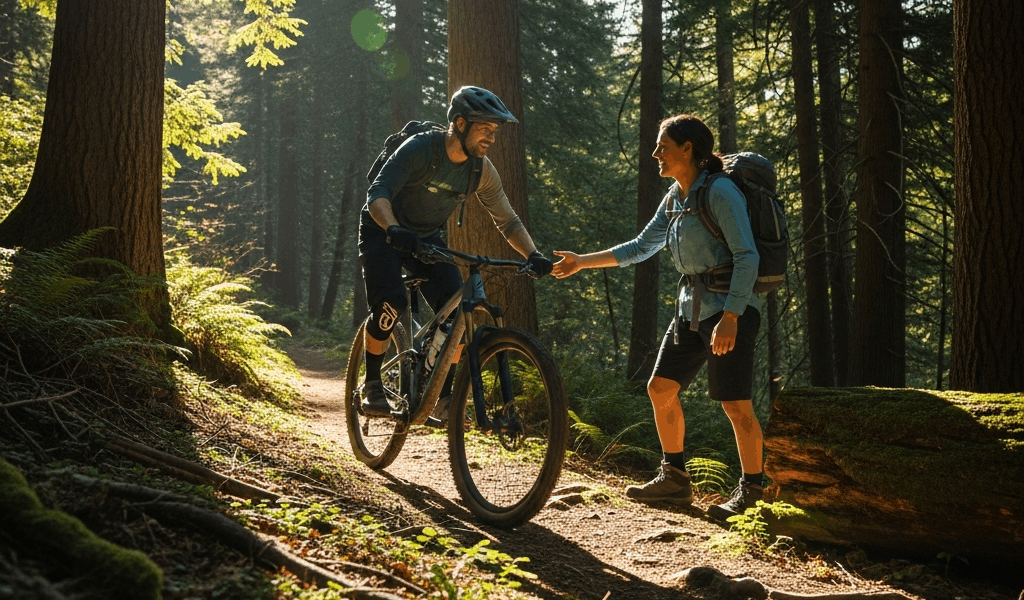
Trail etiquette has gotten complicated with all the conflicting advice flying around — who has right of way, whether bells are rude, what to actually say when you’re coming up on someone fast. As someone who’s been riding trails for years and has stepped in basically every social landmine that exists out there, I’ve learned most of this the hard way. Today I’ll share what actually matters.
Announce Your Presence on the Trail
This one is so simple it almost doesn’t need a section, but it does because people still blow past hikers without a word. Call out your presence when approaching other trail users — especially around blind corners and on descents where you’re carrying speed. “On your left” from 30–50 feet gives people time to respond calmly instead of jumping sideways in surprise.
On a busy trail, you’ll be doing this every couple of minutes. That’s fine. The three seconds it takes to announce yourself prevents startled hikers from stepping into your path, keeps horse encounters from going badly, and maintains the goodwill between mountain bikers and other trail users that keeps trails open for bikes. That last part matters more than most riders realize.
Right of Way — Know It and Apply It
Mountain bikers yield to hikers and equestrians. Downhill riders yield to uphill riders. Those are the two core right-of-way rules. In practice they’re applied with some common sense — an uphill rider who’s almost at the top of a punishing climb often wants to push through while a descending rider steps aside to let them by. Communicate and be flexible.
What’s not flexible: never assume you have right-of-way over horses. The injury risk from a surprised horse is real, and it’s the rider who gets hurt, not you. Yield unconditionally. Stop your bike, stay calm, and ask what the rider needs before proceeding.
Don’t Ride on Wet Trails
Riding on saturated soil damages trails in ways that take months to fix — tires excavate ruts, destroy drainage features, and cause the kind of erosion that land managers track. Most trail systems post conditions updates. Check them before you drive out. If you arrive at the trailhead and the trail is clearly churned and wet, turn around.
Probably should have led with this one, honestly. Wet trail damage is the single most documented reason land managers restrict bike access. Riders who damage trails in the name of getting their ride in are making it harder for everyone else to get access, not just themselves.
Leave No Trace on the Trail
Gel wrappers, CO2 cartridges, puncture repair waste — all of it comes back with you. This isn’t just personal ethics; it’s documented land access history. Trail litter is one of the specific things land managers cite when restricting user group access. It’s also just embarrassing for the sport.
Don’t Poach Closed Trails
Seasonal closures exist for wildlife protection, trail recovery after weather events, and construction. Riding on closed trails is illegal in most jurisdictions and politically damaging to mountain biking’s relationship with land managers in ways that outlast your individual ride. “I only rode a little bit” isn’t a defense that land managers accept when they’re deciding whether to permit bike access next year.
Greet Other Users
That’s what makes trail culture endearing to us long-time riders — the small acknowledgments that remind everyone sharing the trail that we’re all there for the same reason. A quick “good morning” or “enjoy your ride” when passing other users costs nothing and builds social capital for mountain biking as a trail community. Land managers pay attention to user group relationships. Hikers who consistently have positive encounters with mountain bikers become allies for trail access. Hikers who get regularly startled and never acknowledged become opponents. You’re an ambassador every time you ride a multi-use trail, whether you’re thinking about it or not.

Stay in the loop
Get the latest trail rise updates delivered to your inbox.