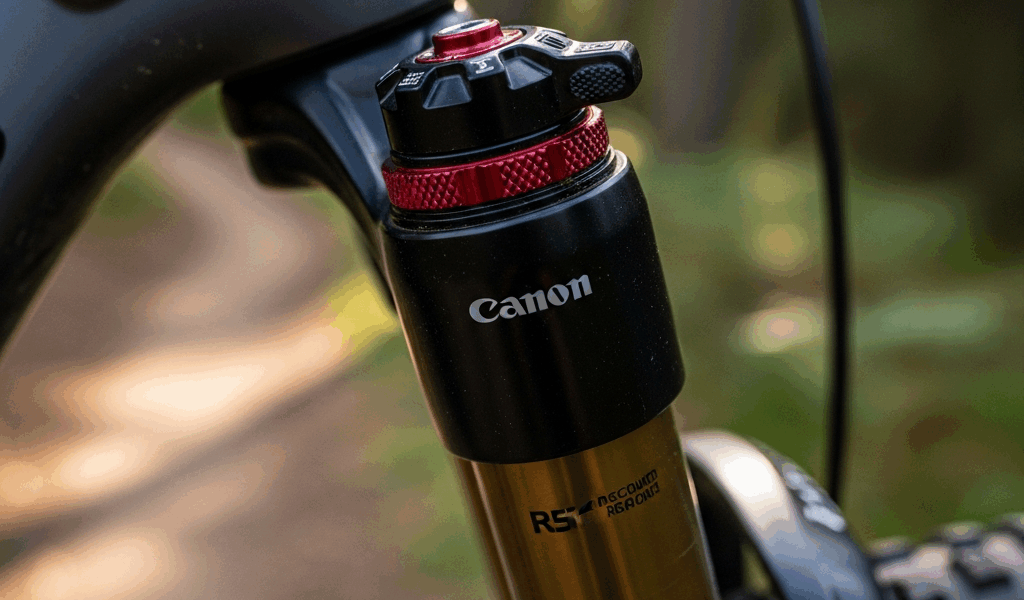
You picked up your first full-suspension mountain bike and the suspension feels either harsh and rigid or wallowy and vague — neither of which matches the plush, controlled feel you expected. The problem is not the suspension. The problem is that it is set for a generic 170-pound rider who does not exist. Mountain bike suspension needs to be tuned to your weight and riding style, and three adjustments — sag, rebound, and compression — transform how the bike handles rough terrain.
Sag: The Foundation of Every Suspension Setup
Sag is how much the suspension compresses under your weight when you sit on the bike in riding position. It is expressed as a percentage of the total suspension travel. Get sag right and everything else becomes easier. Get it wrong and no amount of rebound or compression tuning compensates.
How to measure sag: Put on your riding gear (helmet, pack, water — everything you ride with). Have a friend hold the bike upright while you clip in or place your feet on the pedals in standing position. Settle into your natural riding weight — do not bounce. Have your friend push the rubber O-ring on the shock or fork stanchion down against the seal, then carefully step off the bike without compressing the suspension further. Measure the distance from the O-ring to the seal. Divide by total travel and multiply by 100 for the percentage.
Target sag: 25 to 30% of total travel for most trail and all-mountain riding. For a fork with 150mm of travel, that is 37 to 45mm of sag. For a rear shock with 55mm of stroke, that is 14 to 16.5mm. XC setups run firmer at 20 to 25%. Enduro and downhill setups run softer at 28 to 33%.
How to adjust sag: Air forks and shocks use air pressure. Add air with a suspension pump to reduce sag (firmer), release air to increase sag (softer). Your shock should have a recommended pressure chart based on rider weight — start there and fine-tune based on the measured sag percentage. Coil shocks require swapping the spring to change sag — each spring has a weight range, and you need the correct spring rate for your weight.
If you cannot achieve the target sag within the recommended pressure range, you may need a volume spacer change (for air shocks) or a different spring rate (for coil). Do not just crank the pressure — running a shock at maximum pressure to achieve sag means the air spring curve is wrong for your weight, and the ride quality will be terrible.
Rebound: How Fast the Suspension Returns
Rebound controls how quickly the fork or shock extends back to full travel after compressing. Too fast and the bike bucks like a pogo stick, launching you forward on every bump. Too slow and the suspension stays packed down, losing travel and riding harsh because it cannot recover before the next impact.
How to set rebound: Start with a simple bounce test. Stand next to the bike, push down hard on the handlebar (fork) or saddle (shock), and release. The suspension should return to full extension in a smooth, controlled motion — not snap back instantly and not creep back slowly. One smooth return with a slight hesitation at the top is the baseline.
The rebound dial is typically a red knob at the bottom of the fork legs and on the shock body. Turning clockwise slows rebound (more damping). Turning counterclockwise speeds rebound (less damping). Start at the midpoint of the adjustment range and tune from there.
Trail tuning: Ride a section of trail with consistent bumps — a rooty section or a rock garden you know well. If the bike feels like it is bouncing and the rear end kicks up on sequential hits, rebound is too fast — slow it down one click at a time. If the bike feels harsh and rigid over repeated bumps, like the suspension is not recovering between impacts, rebound is too slow — speed it up. The ideal rebound setting lets the suspension return to full extension just before the next impact.
Front and rear rebound are independent. The fork and shock may need different rebound settings because they handle different forces — the fork absorbs braking impacts and terrain hits, the rear shock absorbs pedaling forces and rear wheel impacts. Tune them separately.
Compression: Controlling How the Suspension Reacts to Impacts
Compression damping controls how easily the suspension compresses when it hits something. More compression damping means the suspension resists compression — it feels firmer and uses travel more slowly. Less compression damping means the suspension compresses easily — it feels plush but may bottom out on large impacts.
Most trail-level forks and shocks have a single compression dial. Higher-end suspension separates compression into low-speed compression (LSC) and high-speed compression (HSC). Low-speed compression controls the suspension’s response to slow, body-weight movements — pedaling bob, brake dive, and weight shifts in corners. High-speed compression controls the response to fast, sharp impacts — rocks, roots, and drops.
Setting compression with a single dial: Start at the midpoint. If the bike bobs excessively while pedaling and feels wallowy in corners, add compression (clockwise) one click at a time until the bob is controlled but the bike still absorbs trail bumps comfortably. If the bike feels harsh and rigid over small bumps, reduce compression (counterclockwise) until small impacts feel smooth.
Setting LSC and HSC separately: For LSC, pedal on a smooth trail. Add LSC until pedaling bob is minimal but the fork still moves freely when you hit a bump. For HSC, ride a rough section with sharp impacts. Reduce HSC if the bike feels harsh over rocks and roots. Increase HSC if you are using all your travel too easily and bottoming out on moderate impacts.
Compression and sag interact. If you add significant compression damping, the bike may feel like it has too much sag because the air spring is softer than the compression setting allows it to use. Conversely, reducing compression without adjusting air pressure may cause frequent bottom-outs. After significant compression changes, re-check your sag and adjust air pressure if needed.
The Setup Sequence That Works
Always set up in this order: sag first, then rebound, then compression. Sag determines the baseline spring rate. Rebound controls how the suspension recovers. Compression fine-tunes the feel for your specific trail conditions. Changing the order means you are tuning against a moving target.
Write down your settings. Every fork and shock has clicked positions on the dials — count the clicks from full clockwise. Record your air pressure, rebound clicks, and compression clicks. When something feels off after a ride, you can return to your known-good baseline and change one variable at a time. Randomly spinning dials without tracking your settings leads to chasing your tail and never finding the sweet spot.
Expect to revisit your setup as your riding improves. As you get faster and more confident, you generate more force through the bike, and settings that felt perfect as a beginner may feel too soft or too slow once you are riding harder. Suspension tuning is not set-and-forget — it evolves with you.


Stay in the loop
Get the latest trail rise updates delivered to your inbox.