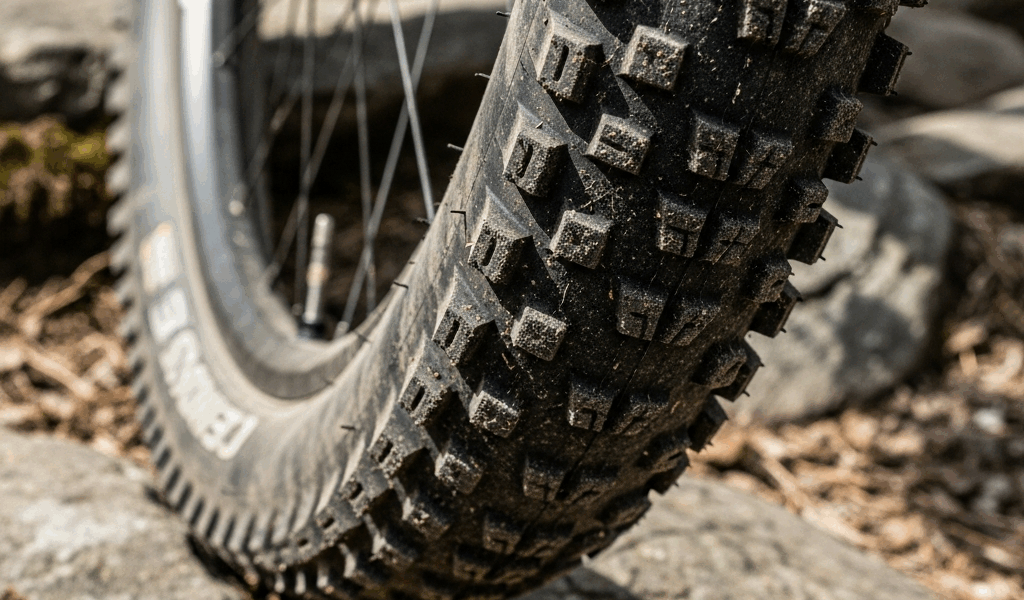
You are standing in front of a wall of mountain bike tires and every one has a different tread pattern — some with tall aggressive knobs, others with low-profile rolling tread, and several that look like they are trying to be both at once. The tread pattern is not aesthetic. It directly determines grip, rolling speed, and how the tire behaves in mud, loose rock, and hard-pack. Picking the wrong pattern for your terrain means either sliding out in corners or dragging unnecessary rubber across the trail.
What Tire Tread Actually Does
MTB tire tread serves three functions: cornering grip, braking traction, and self-cleaning (shedding mud and debris). The height, spacing, and shape of the knobs determine how the tire performs in each category, and every tread design is a compromise between grip and rolling resistance.
Tall, widely spaced knobs dig into loose soil and mud, providing maximum grip at the cost of rolling speed on hard surfaces. Low-profile, tightly spaced knobs roll fast on hard-pack and groomed trails but lack the bite to hold corners in loose conditions. The transition from center tread to side knobs determines cornering feel — aggressive side knobs engage at lean angles and hold the bike in turns.
Understanding these trade-offs is what separates choosing the right tire from guessing based on what looks aggressive enough.
XC (Cross-Country) Tread Patterns
XC tires prioritize rolling speed above all else. The tread pattern features low-profile center knobs — sometimes nearly smooth center strips — that minimize rolling resistance on hard-pack, groomed singletrack, and fire roads. Side knobs are present but shorter and more closely spaced than trail or enduro tires.
The best XC tires: Maxxis Aspen (the speed benchmark for dry XC racing), Maxxis Ikon (slightly more grip with a mild weight penalty), Schwalbe Racing Ralph (fast rolling with predictable cornering), and Specialized Fast Trak (good all-around XC performance). Widths range from 2.0 to 2.35 inches.
Where XC tread works: dry hardpack, groomed singletrack, racing where speed matters more than descending control. Where it fails: loose over hard, wet roots, technical descents with unpredictable surfaces. If you are primarily climbing and riding flowy trail, XC tread is the right choice. If your trails have meaningful technical descents, you will want more tread than XC offers.
All-Mountain (Trail) Tread Patterns
Trail tires sit in the middle of the tread spectrum — enough grip for technical descents, enough rolling efficiency that climbing does not feel punishing. This is the category most riders should start with because it covers the widest range of conditions without being terrible at anything.
The tread pattern features medium-height center knobs that provide traction on loose surfaces while still rolling reasonably on hard-pack. Side knobs are taller and more pronounced than XC tires, engaging at lean angles for confident cornering on loose dirt and damp roots. Spacing is moderate — enough to shed mud in wet conditions without the wide gaps that slow you down on firm ground.
The standard trail tires: Maxxis Dissector (the versatile do-everything trail tire), Maxxis Minion DHF front / Dissector rear (the most popular mixed-terrain combo), Schwalbe Nobby Nic (versatile European trail standard), and Continental Trail King (aggressive trail with excellent cornering). Widths: 2.3 to 2.6 inches.
Where trail tread works: mixed terrain, variable conditions, trails with both climbing and descending sections, year-round riding in moderate climates. Where it compromises: not fast enough for XC racing, not aggressive enough for sustained steep and loose enduro descents. For most recreational mountain bikers riding diverse trail networks, a good trail tire is the one-tire answer.
Enduro and Downhill Tread Patterns
Enduro and DH tires prioritize grip and braking control at the expense of rolling speed. The tread pattern features tall, widely spaced knobs that bite into loose soil, rock gardens, and wet surfaces. Side knobs are aggressive and tall — they engage hard in corners and provide the confidence to lean the bike over on steep off-camber sections.
The tread spacing is wide enough for effective self-cleaning in mud. Enduro tires are designed for trails where the consequences of losing traction are significant — steep, technical, and often loose or wet. Rolling resistance is noticeably higher than trail tires, and climbing on these tires is a workout. But nobody picks an enduro tire to win the climb — they pick it to survive the descent.
The enduro standards: Maxxis Minion DHF front / Minion DHRII rear (the defining enduro combo for a decade), Maxxis Assegai (the aggressive front tire for steep, loose conditions), Schwalbe Magic Mary (European enduro benchmark), and Continental Der Kaiser (maximum grip, maximum weight). Widths: 2.4 to 2.6 inches.
Where enduro tread works: steep descents, bike parks, loose-over-hard conditions, wet roots and rocks, any terrain where losing traction means crashing. Where it costs you: climbing (expect to work harder), long flat transfers (the rolling resistance is noticeable), and dry hardpack (the aggressive tread pattern has nothing to grab on smooth surfaces).
Front and Rear Tire Strategy
Running the same tire front and rear is simple but not optimal. Most experienced riders run a more aggressive tire up front (for cornering grip and braking control) and a faster-rolling tire in the rear (for climbing efficiency and reduced drag).
The classic combinations: Maxxis Minion DHF front / Dissector rear for trail riding. Minion DHF front / DHRII rear for enduro. Assegai front / DHRII rear for steep and loose. Ikon front / Aspen rear for XC racing. The front tire does the steering and most of the braking — it needs the most grip. The rear tire provides drive traction and follows the front — it can sacrifice some grip for rolling efficiency.
If you are new to mountain biking and overwhelmed by the options, start with a matched pair of trail tires (Maxxis Dissector or Schwalbe Nobby Nic in 2.4 or 2.5 width). Ride them for a season, learn what your trails demand, and then experiment with front/rear combinations based on where you want more grip versus more speed. The tire is the cheapest component swap on a mountain bike and the one that changes ride feel the most.



Stay in the loop
Get the latest trail rise updates delivered to your inbox.