How to Break In Hiking Boots Without Getting Blisters
Learning how to break in hiking boots the right way is one of those things that separates a great trip from a miserable one. I’ve been hiking for over fifteen years, logged trails in the Cascades, the Smokies, and more overgrown Vermont sidetrails than I can count — and my single biggest rookie mistake happened on a 9-mile loop in the White Mountains when I wore brand-new Salomon Quest 4D GTX boots straight out of the box. By mile four I had silver-dollar-sized blisters on both heels. Finished the hike. Barely. My hiking partner still brings it up.
Here’s what I know now that I didn’t know then: breaking in boots isn’t just about softening leather. It’s about training your feet, your socks, and your lacing habits to work together. Do all of that correctly, and blisters become optional — not inevitable.
The Short Answer — Wear Them Before the Trail
Two to three weeks of daily wearing before any serious hike. That’s it. That’s the rule. Non-negotiable.
I know that sounds boring. I know you bought the boots because you have a trip coming up and you’re excited. Do it anyway. Every shortcut I’ve ever taken with new boots has cost me skin. The boots need time to flex, and your feet need time to adjust to the boot’s specific pressure points, toe box shape, and heel cup geometry. No amount of saddle soap, mink oil, or boot stretcher replaces actual time on your feet.
Probably should have opened with this section, honestly. Most blister guides skip straight to moleskin and forget that prevention starts weeks before you ever hit a trailhead.
Two to three weeks sounds like a lot until you’re limping back to your car on day two of a five-day backpacking trip.
Day 1–3 — Indoor Wearing
Put the boots on at home. Walk around on hardwood floors, tile, linoleum — any hard surface. Wear the exact socks you plan to hike in. This is critical. Darn Tough hiker socks (I use the style 1987 in cushion weight) run about $25 a pair and they will change your relationship with footwear. Do not wear cotton. Do not wear thin athletic socks. The sock is part of the system.
Wear the boots for 30 to 45 minutes on day one. Take them off. Check your feet. You’re looking for red spots — those are your early-warning hot spots. Mark them mentally. They’re telling you exactly where friction will happen on the trail.
If you’re feeling real pain — not just stiffness, but actual sharp pressure — after 30 minutes of flat indoor walking, the boots may be the wrong size. Hiking boots should fit snug through the heel and midfoot with about a thumbnail’s width of space between your longest toe and the end of the boot. Your heel should not lift more than a few millimeters when you walk. If it’s lifting significantly, you need a half size down or a different lacing setup (more on that shortly).
Days two and three, extend to 60 to 90 minutes. Wear them while cooking dinner, doing errands around the house, whatever. The goal is accumulated foot time, not intensity.
What to Watch For
- Redness on the back of the heel — heel counter needs to soften
- Pinching on the little toe — toe box may be too narrow
- Pressure on top of the foot — lacing is too tight or instep is high
- Numbness in toes — boot is too tight across the forefoot, loosen the middle laces
Day 4–7 — Short Walks Outside
Move outside. Pavement first — sidewalks, neighborhoods, a local park. Start at one mile. Build to two miles by day seven. No trails yet.
Pavement is actually harder on boots and feet than trail in some ways — less give, more repetitive impact. That works in your favor here. The boots will flex through their full range of motion faster than they would shuffling around your kitchen.
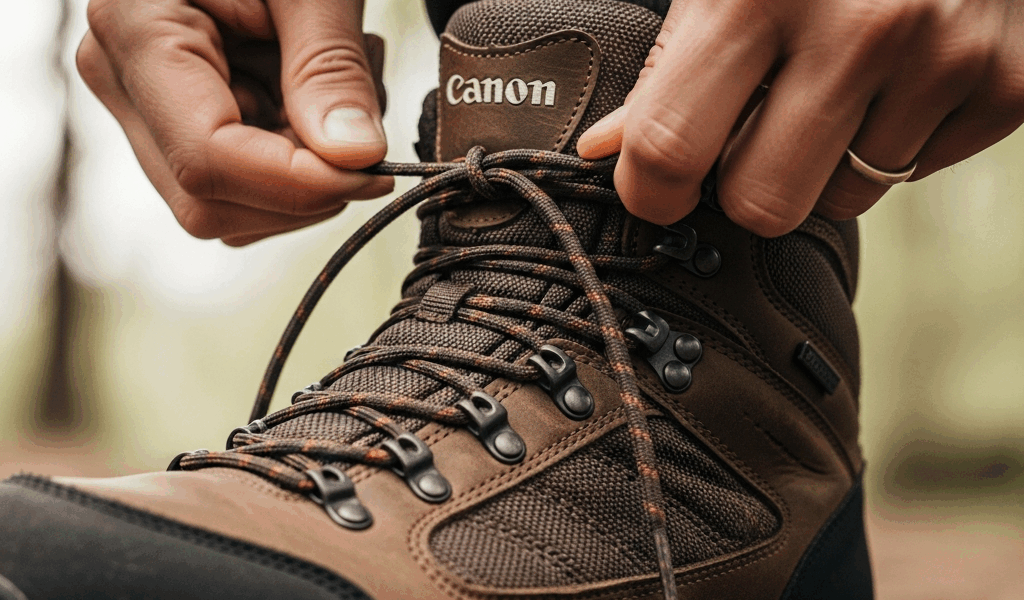
Burned by skipping lace adjustments on my first real long walk, I now spend two minutes before every outing dialing in lace tension. Here’s the method that works: lace the lower eyelets snug but not tight, then when you get to the ankle, use a surgeon’s knot (loop twice before crossing, not once) to lock that tension in before continuing up to the top hooks. This keeps the heel seated in the cup and reduces the slipping that creates heel blisters.
Different pressure points need different lace tensions. If you have a hot spot on top of your foot, skip the eyelet directly over it. Seriously — lace right past it. This is called a lace window and it distributes pressure away from that specific spot.
By the end of day seven, two miles should feel comfortable. The boot should feel like it’s flexing with your foot rather than against it. If you’re still fighting the boot, give it a few more days of neighborhood walking before moving to trail.
Week 2 — Easy Trail Test
Find a short, flat trail. Two to three miles. Nothing with significant elevation gain. Bring your full pack, or at least load a daypack to roughly the weight you’ll carry on your real hike. Weight changes everything — it pushes your foot forward in the boot, which changes where friction happens, and adds enough heel lift that a barely-acceptable fit becomes a blister factory.
This is where problems show up. Good. You want to find them here, not on a 15-mile day in the backcountry.
Stop at the one-mile mark. Take the boots off. Inspect your feet. Any red spots that are developing? Apply moleskin or Leukotape right then, before the hot spot becomes a blister. This is the move most hikers don’t make — they feel the hot spot, think “I’ll deal with it later,” and deal with it later means draining a fluid-filled bubble with a needle by headlamp.
If Hot Spots Develop on the Trail
- Stop immediately when you first feel friction — not burning, not pain, friction
- Remove the boot and sock
- Apply Leukotape directly to the skin (not over a sock, not over moleskin — skin)
- Smooth out every wrinkle before putting the sock back on
- Readjust lacing before continuing
Leukotape P is about $12 for a roll and it stays on through sweat, stream crossings, and multi-day wear in a way that regular moleskin or Band-Aids simply don’t. Cut it with scissors — it tears badly by hand.
Blister Prevention Toolkit
Breaking in the boots buys you 80% of the way there. The other 20% comes from having the right gear and knowing how to use it. These aren’t backup options. They work better in combination with break-in than either approach alone.
Injinji Toe Socks
Weird-looking. Incredibly effective. Injinji toe socks ($18–$22 per pair) put a thin layer of fabric between each toe, eliminating toe-to-toe friction entirely. I resisted these for years because they look ridiculous. I’ve worn them almost exclusively for the last four hiking seasons. The blisters between my second and third toe — chronic for me — disappeared completely.
Moleskin — Applied Before, Not After
The mistake is treating moleskin as a blister treatment. It’s not. It’s a blister prevention tool. Apply it preemptively to any spot that showed friction during your break-in walks. Before you put the boots on at the trailhead, moleskin goes on your known hot spots. Dr. Scholl’s moleskin padding runs about $6 at any drugstore. Cut it into shapes that match your hot spot, round the corners so it doesn’t peel up.
Leukotape for High-Friction Zones
Leukotape P (the athletic version, not the medical version) is the closest thing hiking has to a miracle product. It’s a rigid sports tape with an adhesive so aggressive it stays on for days. Use it on heels, little toes, or anywhere moleskin doesn’t stay put. Some hikers tape their feet entirely before every long hike. That’s not overkill — that’s experience talking.
Heel Lock Lacing
Most hiking boots have an extra eyelet or hook near the ankle specifically for this technique. Thread the lace through that top eyelet to create a loop, then cross and thread through the opposite loop before tying. This cinches the heel into the boot cup and dramatically reduces up-and-down heel movement. Heel movement is the primary cause of heel blisters. Locking the heel down costs you nothing and saves you significant pain.
Body Glide or Anti-Chafe Balm
Apply to the ankle, heel, and any other skin that contacts the boot. Body Glide is $9 and looks like a deodorant stick. It reduces friction without making your feet slippery inside the boot. Useful during the early break-in period when the boot’s interior is still breaking down and slightly abrasive.
The Honest Summary
Breaking in hiking boots takes time you might not feel like you have. Do it anyway. Three weeks of wearing boots around the house and on short walks is genuinely the most important thing you can do before a serious hike. Layer in the right socks, preemptive tape on your known hot spots, and a heel-lock lacing setup, and you’ll arrive at the summit with the same feet you started with.
The hikers I see limping down trails in August are almost always wearing boots that look brand new. That’s not a coincidence. Give your boots the time they need, and they’ll take care of you out there.




Stay in the loop
Get the latest trail rise updates delivered to your inbox.